Correcting rotational imbalances with VibXpert 3
Rotating equipment, such as motors, pumps, and generators, are at the heart of most industrial operations. When these assets fail, they can derail production cycles and force entire operations to shut down. However, proper maintenance of these assets will extend their lifespan, maintaining productivity for years to come and avoiding unplanned downtime and unnecessary maintenance costs. One of the best ways to keep rotating machinery in good condition is to quickly identify, diagnose, and correct rotational imbalances. When maintenance teams can quickly and accurately diagnose imbalance, repairs are simpler and costs remain low.
Recent technological advances have made it easier than ever to identify and correct imbalances early, before the problem requires costly and complicated repairs. While it was historically difficult to capture accurate measurements in the field, modern technology now allows maintenance personnel to accurately identify sources of imbalance and make repairs without disassembling or moving equipment to a workshop.
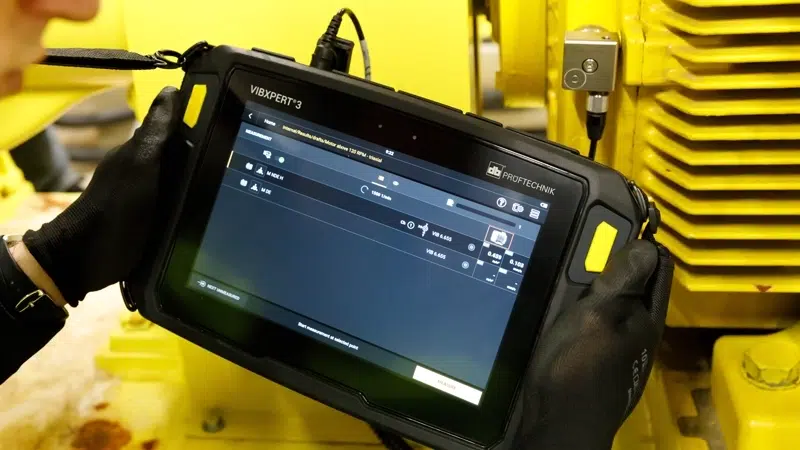
The VibXpert 3 Balancer is one of the fastest and most accurate tools on the market for diagnosing and correcting imbalance issues. The tool has the added benefit of being extremely user-friendly. In fact, the VibXpert 3 Balancer is so intuitive to use that it can act as an educational tool, helping employees learn as they use it. When used correctly, the VibXpert 3 Balancer allows teams to keep their equipment operational for longer and protect it from the problems associated with unbalanced assets.
Why are imbalances such a problem?
Imbalance is one of the leading causes of rotating equipment failure. The problem is dangerous precisely because it can be difficult to identify. At first, the imbalance in the machine is subtle. But if left uncorrected, it will damage the machine and its components. In the worst case, the imbalance can also pose a danger to the environment and workers in the area.
Even a seemingly minor imbalance increases asset vibration levels. As vibration levels increase, they cause excessive friction and heat, ultimately leading to premature wear of bearings, shafts, belts and other machine components. An imbalance can also damage the machine’s support.
As imbalance worsens, equipment components must be replaced more frequently, increasing repair and replacement part costs. An unbalanced machine will also consume more energy and operate less efficiently, increasing costs and slowing production.
Finally, if machine imbalance is left unchecked for too long, it can lead to a failure that brings the entire operation to a standstill, draining resources and impacting customer relationships. Imbalance can even become a real hazard. For example, an unbalanced asset can overheat to the point of causing a fire. The noise and unpredictable movements caused by high vibration levels can also be hazardous to personnel and the environment.
Other points to consider when correcting rotational imbalances
In recent years, maintenance teams have faced new and intense pressures, impacting virtually every aspect of the job. Most operations today use a greater variety of complex equipment than in previous years.
At the same time, maintenance teams are working with a reduced workforce and the skills gap is widening . As more experienced employees reach retirement age, newer employees often lack the skills and training to identify and resolve issues, such as imbalances, with traditional tools.
Maintenance managers must find smart ways to use their limited resources to keep assets operational, while often overseeing multiple work sites.
What does this mean in terms of imbalance?
The realities of today’s workforce indicate that many employees do not have the experience or training to identify and correct rotational imbalance problems. They need modern, sophisticated tools that can guide them through the process of measuring, diagnosing, and correcting the imbalance. These tools can be powerful tools for on-the-job training, allowing employees to learn while they work.
Today’s maintenance teams also need tools that work quickly and efficiently. As machines become more complex, it also becomes more difficult to isolate and diagnose faults. An effective balancing tool must be able to take measurements quickly from multiple points. It must also be able to store the measurements and make them easily available for analysis.
Given the time constraints that most maintenance teams face today, modern tools must also perform in the field . This means that tools must be robust, durable and easy to handle, even in harsh environments. This may sound very ambitious, but it is within reach.
The VibXpert 3 offers all these features and more.
Introducing the VibXpert 3 Balancer
The VibXpert 3 is a next-generation precision balancing tool designed to meet the needs of today’s workforce. It takes fast, accurate measurements from six points at a time, providing comprehensive insight into the condition of the machine. The tool is highly intuitive to use, even for operators without a strong technical background. The VibXpert 3 is rugged and durable, making it ideal for use in the field. At the same time, its capabilities exceed those of a traditional field balancer.
The VibXpert 3 solves all the common problems associated with imbalance:
The VibXpert 3 can identify the exact location of the imbalance and ensure its resolution.
The VibXpert 3 features six synchronous channels, making it easy to perform vibration measurements on multiple channels. Older balancing tools required users to set up a vibration sensor, take and record a measurement, and then move the balancer to the next point on the machine for another measurement. The process was laborious and error-prone.
The VibXpert 3’s multi-channel functionality works much faster than older balancers. Setup takes just a few minutes and measurements are virtually instantaneous. The machine also measures vibration levels in multiple formats, so users can collect spectrum data as well as overall vibration levels.
The result: a tool that quickly and accurately identifies the source of imbalance, so maintenance technicians can immediately make repairs.
The VibXpert 3 can be used in the field, even in harsh environments.
The VibXpert 3 is rugged and built to withstand the harshest environments. It can even be dropped without sustaining damage. It resists water and dust infiltration, and maintains its high performance even in extreme temperatures. The tool’s touchscreen is also scratch-resistant.
Most importantly, the VibXpert 3 works quickly and accurately, so the job gets done without delay. Crews can achieve the same level of accuracy as with a specialist, but they will save time and resources.
The VibXpert 3 is intuitive and easy to use, even for teams with expertise constraints.
The VibXpert 3 features an interactive touchscreen that gives users full visibility into the data the tool is capturing. The touchscreen resembles a mobile app, making it a natural fit for the next generation of operators. Users can simply tap and swipe the screen to navigate fields or pinch to zoom. Menus are clear and easy to understand. Plus, all relevant vibration data is displayed in one place for easy access.
The interactive display also guides users through the rotational imbalance measurement and correction process, step by step. It helps users identify the exact source of the imbalance and correct the problem. And because multi-point measurements are quick and easy, operators can easily recheck to ensure the original problem is completely corrected.
Key points
Fluke Reliability engineers designed the VibXpert 3 to be faster, more accurate, and more intuitive than other balancing tools. The VibXpert 3 doesn’t just spot problems—it helps fix them.
With six synchronous channels, the tool can account for even the most subtle changes in vibration patterns, both on equipment and components. The VibXpert 3 is a tool that makes being meticulous easy.
The result? An easy solution to correct rotation imbalances, resulting in greater availability, increased productivity and reduced maintenance costs.


